

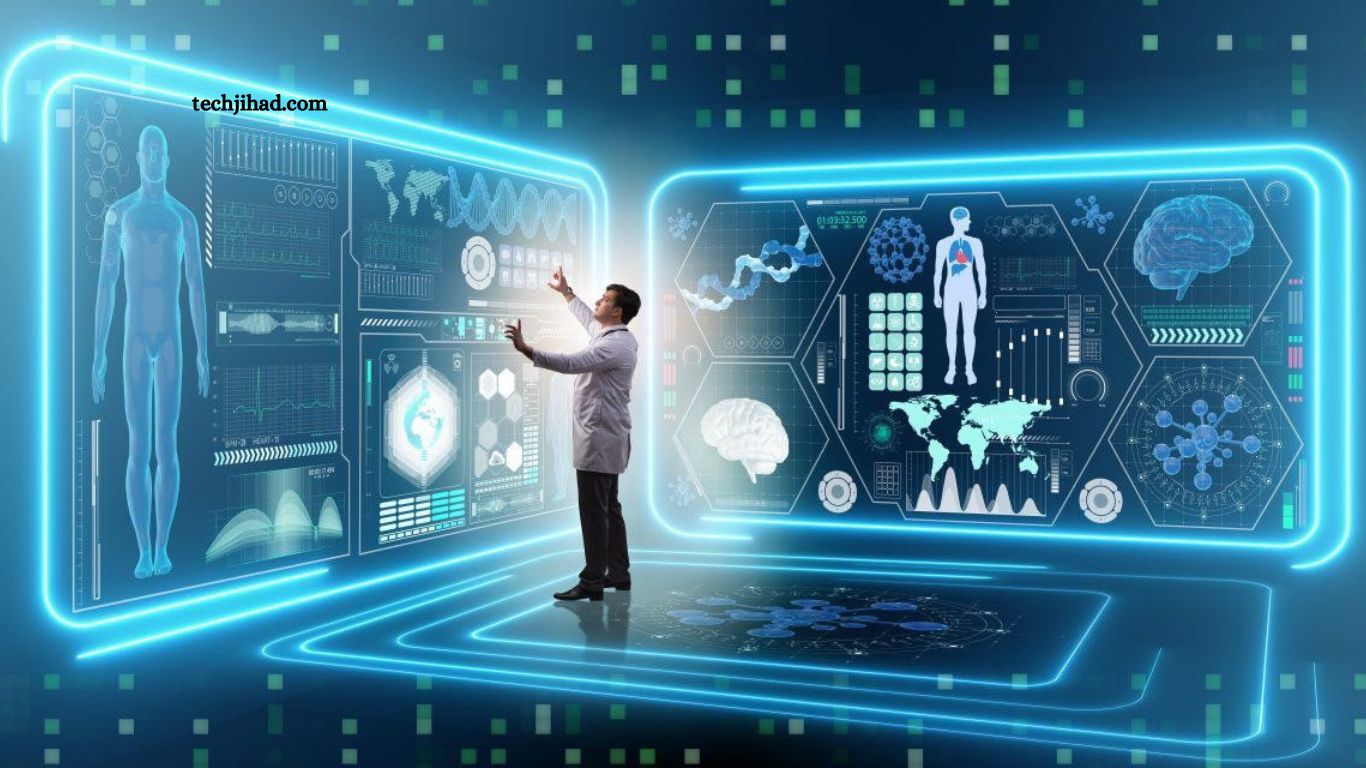
Artificial Intelligence (AI) is transforming industries worldwide, driving innovation in business, healthcare, and education. Businesses leverage AI to improve efficiency, automate processes, and gain actionable insights from data. In healthcare, AI enhances diagnostics, patient care, and operational accuracy.
Education benefits from AI through personalized learning, adaptive tools, and streamlined administration. Understanding AI’s potential allows organizations to adopt smarter solutions, stay competitive, and improve outcomes. The integration of AI reshapes traditional practices, creating opportunities for growth and innovation across sectors.
Read More: AI Trends 2026: What’s Next for Artificial Intelligence?
AI in Business
AI revolutionizes business by automating tasks, analyzing data, and optimizing operations. Companies utilize AI-powered tools for predictive analytics, customer insights, and personalized marketing strategies. Machine learning algorithms detect trends, improve inventory management,
And enhance supply chain efficiency. AI chatbots deliver instant customer support, reducing response time and improving satisfaction. Businesses that adopt AI experience increased productivity, reduced operational costs, and faster decision-making.
AI in Healthcare
Healthcare benefits immensely from AI, offering faster diagnostics, personalized treatments, and efficient patient management. AI-driven imaging tools detect diseases such as cancer or cardiovascular issues with high accuracy. Predictive analytics assist in early detection, improving patient outcomes.
AI-powered virtual assistants support medical professionals in managing schedules, monitoring patient health, and providing accurate information. The integration of AI streamlines operations, reduces errors, and enhances overall healthcare quality, allowing professionals to focus on patient care rather than administrative tasks.
AI in Education
Education experiences a transformation through AI, making learning more personalized, interactive, and accessible. AI tools analyze student performance, identifying strengths and weaknesses to create customized learning plans. Virtual tutors provide instant feedback, enhancing engagement and knowledge retention.
AI-powered platforms enable adaptive learning, allowing students to progress at their own pace. Educational institutions utilize AI to automate administrative tasks, manage resources efficiently, and support teachers in creating effective curricula. The result is improved learning outcomes and a more inclusive educational environment.
Future of AI Across Industries
The future of AI promises continued innovation. Businesses will rely on AI for strategic decision-making and operational efficiency. Healthcare will advance with AI-assisted diagnostics, robotic surgeries, and predictive care models.
Education will evolve with AI-driven learning platforms, virtual classrooms, and intelligent assessment systems. Organizations embracing AI remain competitive, adaptive, and prepared for technological advancements shaping the global economy.
Frequently Asked Questions
What is AI?
AI, or Artificial Intelligence, is technology that enables machines to learn, analyze data, and perform tasks like humans.
How does AI help businesses?
AI improves efficiency, predicts trends, personalizes marketing, and automates customer support.
How is AI transforming healthcare?
AI assists in diagnostics, patient monitoring, predictive care, and reduces medical errors.
Can AI improve education?
Yes, AI personalizes learning, provides virtual tutoring, and helps teachers manage resources.
Is AI expensive to implement?
Costs vary, but AI investments often reduce operational expenses and increase long-term efficiency.
What is the future of AI in industries?
AI will drive innovation, improve decision-making, and create smarter, more efficient business, healthcare, and educational systems.
Conclusion
AI holds transformative power across business, healthcare, and education. Its ability to automate tasks, enhance decision-making, and personalize experiences drives efficiency and growth. Companies, medical institutions, and educational organizations adopting AI gain strategic advantages, improve outcomes, and foster innovation.
