

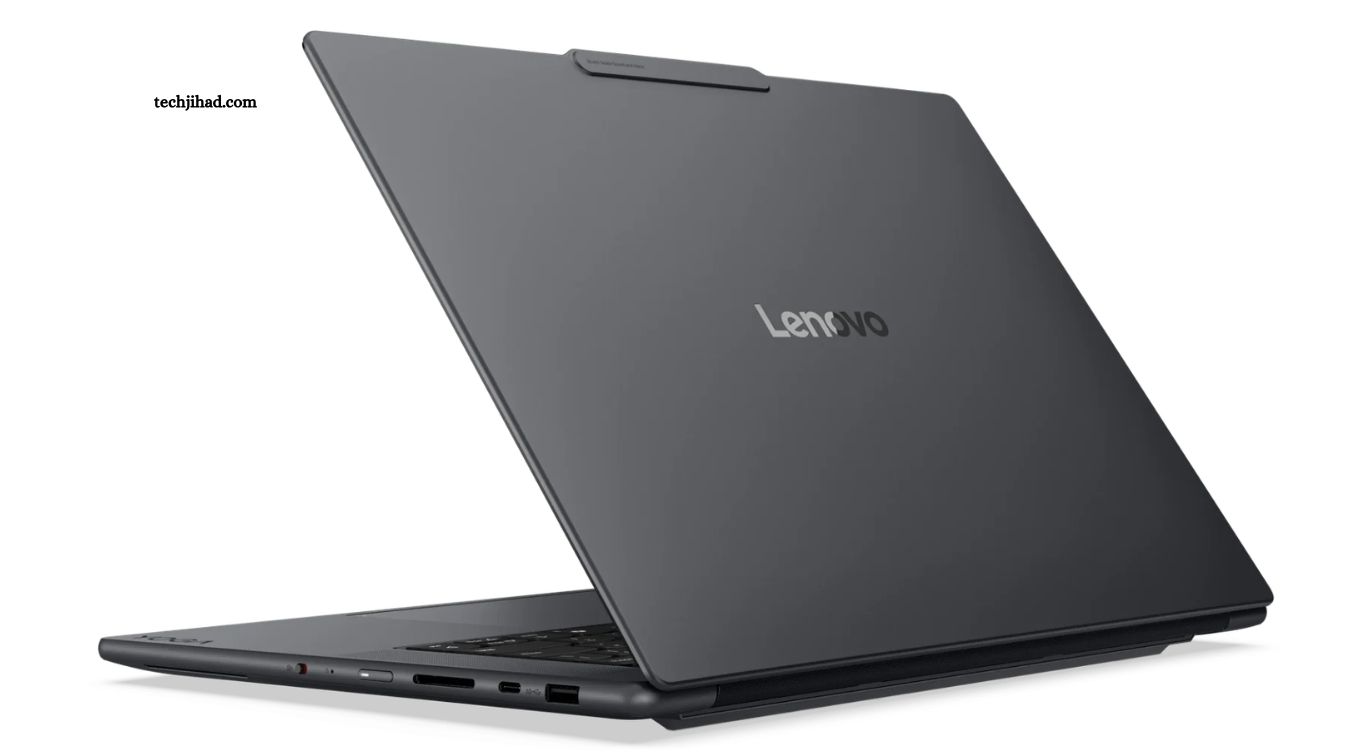
Artificial intelligence is quickly becoming a major part of modern computing, and Lenovo is making that shift more visible with its latest products. At IFA 2026 in Berlin, Lenovo introduced a broad range of AI-powered PCs, laptops, desktops, tablets, and new computing concepts designed around its growing Hybrid AI strategy.
Rather than treating AI as a simple software feature, Lenovo is working toward a connected ecosystem where AI can operate across devices, locally and through the cloud. The company’s latest announcements show how its AI PC strategy is moving from early experimentation toward practical everyday use.
Read More: Windows 11 September Patch Fixes Nearly 1,000 Vulnerabilities
Lenovo Expands Its AI PC Strategy at IFA 2026
Lenovo’s IFA 2026 showcase focused heavily on personal AI and intelligent computing. The company presented its vision of “one personal AI, multiple devices,” connecting PCs, smartphones, tablets, wearables, and other technology around a user’s needs.
The strategy combines local processing with cloud and edge computing. This hybrid approach allows devices to handle suitable AI workloads directly while using remote computing resources for more demanding tasks.
For consumers, the goal is simple: make AI more useful without requiring users to constantly switch between different applications and services.
New Lenovo AI PCs Bring More Power to Users
Lenovo unveiled several new AI-focused devices across its Yoga, IdeaPad, ThinkBook, and ThinkCentre families.
The IdeaPad Vibe series, available in 14-inch and 15-inch versions, brings AI capabilities to mainstream consumer laptops. Depending on the configuration, the systems use modern Snapdragon X or AMD Ryzen AI platforms.
Lenovo also introduced the IdeaCentre AIO i Gen 11, an all-in-one desktop featuring AI-focused functionality and intelligent performance features. These products show Lenovo’s intention to bring AI beyond premium laptops and into everyday computing.
Yoga Series Targets Creators and Power Users
Lenovo’s Yoga portfolio received some of the most interesting AI-focused upgrades at IFA 2026. The company showcased the Yoga Pro 9n Gen 11 and Yoga 9n 2-in-1, designed for users who need stronger performance for creative work and demanding applications.
The emphasis is not only on raw performance. Lenovo is combining powerful processors, AI acceleration, premium displays, and flexible form factors to create systems capable of handling modern creative and productivity workloads.
For creators, this could mean faster editing, improved AI-assisted workflows, and better performance when running demanding applications.
Local AI Becomes a Bigger Priority
One of the biggest developments behind Lenovo’s latest AI PC push is the growing importance of local AI processing.
Traditional AI services often depend heavily on cloud computing. AI PCs can instead use dedicated processing hardware, including NPUs and GPUs, to perform certain workloads directly on the device.
Local processing can offer several benefits:
- Faster response times for supported AI tasks
- Reduced dependence on an internet connection
- Better control over sensitive information
- Lower cloud dependency for certain workloads
- More efficient AI features across everyday applications
This could become increasingly important as AI assistants become a normal part of personal computers.
Lenovo Qira Connects AI Across Devices
Lenovo’s AI strategy extends beyond individual PCs. A major part of its ecosystem is Lenovo Qira, the company’s personal AI system designed to work across supported Lenovo and Motorola devices.
Qira is intended to provide continuity between PCs, smartphones, tablets, and wearables. Instead of treating every device as a separate environment, Lenovo wants AI to understand the user’s activities and help maintain continuity between them.
For example, users could begin an activity on a laptop and continue it through another connected device. This approach moves AI beyond simple chatbots and toward more contextual assistance.
AI PCs Are Moving Beyond Basic Features
Early AI PCs often focused on features such as background blur, noise cancellation, image effects, and basic productivity assistance. Lenovo’s latest strategy points toward something broader.
The company is exploring AI that can understand context, automate tasks, improve productivity, support creative workflows, and work across multiple devices.
This shift could make AI PCs more useful in everyday situations instead of limiting AI to a small collection of built-in features.
Business PCs Also Get the AI Treatment
Lenovo’s AI push is not limited to consumers. The company is also expanding AI capabilities across its Think family of business devices.
AI-enabled ThinkCentre systems, ThinkPad solutions, security technologies, and business infrastructure are becoming part of Lenovo’s broader AI strategy.
For businesses, AI PCs can provide more than productivity improvements. Local AI processing can support security, data management, collaboration, and specialized workflows while giving IT teams greater control over how AI is deployed.
What Lenovo’s IFA 2026 Strategy Means for Consumers
Lenovo’s latest announcements suggest that AI PCs are becoming a mainstream category rather than a temporary technology trend.
The company is targeting different types of users:
- Students can benefit from AI-assisted learning and productivity.
- Creators can use AI acceleration for demanding creative workloads.
- Professionals can gain smarter productivity and collaboration tools.
- Gamers can benefit from powerful processors and graphics hardware.
- Businesses can deploy AI capabilities with greater security and control.
- Everyday users can access AI assistance without relying entirely on separate services.
This broad approach could help Lenovo make AI PCs more relevant to ordinary consumers.
Lenovo Is Building a Hybrid AI Future
The most important takeaway from IFA 2026 is that Lenovo is not simply adding AI branding to existing computers. The company is building a broader Hybrid AI ecosystem that combines devices, local processing, edge computing, cloud infrastructure, software, and connected services.
This strategy allows AI workloads to be handled in different places depending on performance, privacy, connectivity, and user requirements. That approach could become increasingly important as AI workloads grow more sophisticated.
The Future of Lenovo AI PCs
Lenovo’s IFA 2026 announcements highlight a clear direction for the PC industry. AI is becoming deeply integrated into hardware, operating systems, applications, and connected ecosystems.
The latest Yoga, IdeaPad, ThinkBook, and ThinkCentre products demonstrate different ways AI can improve computing, while Lenovo’s experimental concepts show that the company is also exploring new approaches to performance and device design.
The next stage of AI PCs will likely be less about simply having an NPU and more about what the computer can actually do with AI. Lenovo appears ready to compete on that front.
Frequently Asked Questions
What did Lenovo reveal at IFA 2026?
Lenovo revealed new AI-powered PCs, laptops, desktops, and connected AI solutions.
What is Lenovo’s Hybrid AI strategy?
Hybrid AI combines local device processing with cloud and edge computing for flexible AI performance.
What is Lenovo Qira?
Lenovo Qira is a personal AI system designed to connect experiences across supported Lenovo and Motorola devices.
Which Lenovo products received AI upgrades?
Yoga, IdeaPad, ThinkBook, ThinkCentre, and other Lenovo product lines received new AI-focused features.
Why are AI PCs becoming popular?
AI PCs can provide faster processing, intelligent features, improved productivity, and better support for local AI workloads.
What is the future of Lenovo AI PCs?
Lenovo is moving toward smarter computers that combine AI hardware, software, local processing, and connected devices.
Conclusion
IFA 2026 reveals Lenovo’s new AI PC push as a major step toward more intelligent and connected personal computing. From mainstream IdeaPad laptops to premium Yoga systems and business-focused Think devices, Lenovo is expanding AI across its portfolio. Its Hybrid AI strategy, local processing capabilities, and Lenovo Qira ecosystem show a future where AI becomes a natural part of everyday computing rather than an optional feature.

1 Comment
Pingback: 2nm Chips Move From Labs to High-Volume Production - TechJihad