

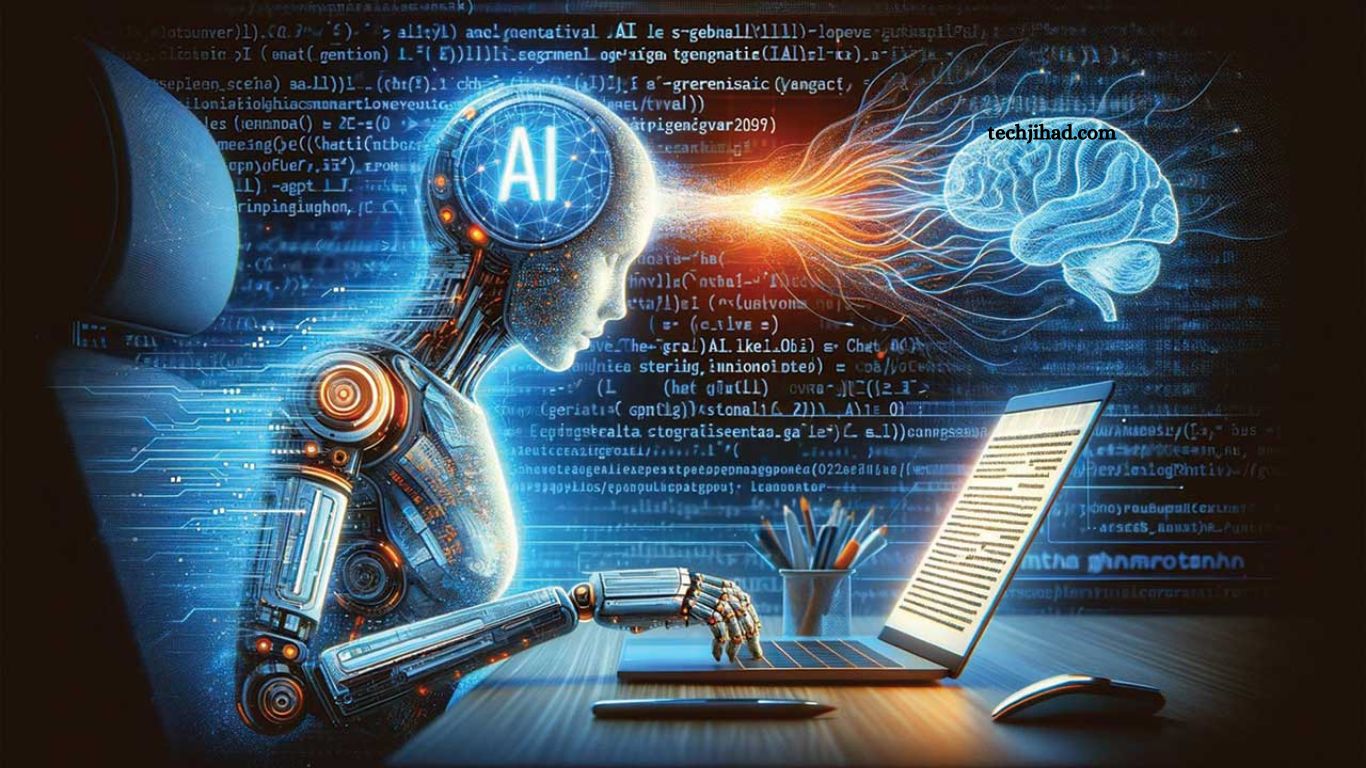
Artificial Intelligence (AI) is revolutionizing technology, reshaping industries, and transforming everyday life. From business operations to healthcare, AI enhances efficiency, accuracy, and innovation at an unprecedented pace. By automating repetitive tasks, analyzing massive datasets, and enabling smarter decision-making, AI empowers companies and individuals to achieve more with less effort.
Communication, cybersecurity, and digital services now rely on AI to deliver seamless, personalized experiences. As AI continues to evolve, its integration with emerging technologies like IoT, cloud computing, and smart devices promises even greater breakthroughs. Understanding how AI drives technological change is essential for staying competitive in today’s fast-paced world.
Read More: Best AI Tools for Productivity
AI and Automation
Automation powered by AI reduces manual workloads, enabling faster and smarter operations. In manufacturing, AI-driven robots optimize production lines.
In software development, AI tools accelerate coding, testing, and deployment. Automation through AI minimizes errors, saves time, and cuts operational costs.
AI in Data Analysis
Data has become the backbone of modern technology. AI excels at processing massive datasets, identifying patterns, and generating insights beyond human capability.
Companies use AI for predictive analytics, market research, and customer behavior analysis. The result is smarter decision-making and more personalized user experiences.
AI and Healthcare Technology
Healthcare benefits tremendously from AI innovations. AI algorithms assist in disease detection, medical imaging, and drug discovery.
Patient care improves through AI-powered virtual assistants and predictive health monitoring. Technology combined with AI enhances both efficiency and accuracy in medical processes.
AI in Communication
AI changes how humans interact with technology. Virtual assistants, chatbots, and voice recognition systems provide seamless user experiences.
Natural language processing allows AI to understand and respond in human-like ways. Communication becomes faster, more intuitive, and highly personalized.
AI and Cybersecurity
Security challenges grow alongside technological advancements. AI enhances cybersecurity by identifying threats, monitoring networks, and predicting vulnerabilities.
Machine learning algorithms adapt to emerging risks, protecting sensitive information effectively. AI strengthens the technological framework, making systems more resilient.
The Future of AI in Technology
AI continues to evolve, integrating with emerging technologies such as blockchain, Internet of Things (IoT), and cloud computing. Innovations like autonomous vehicles,
Smart cities and personalized digital services are reshaping how society interacts with technology. The future promises even more transformative changes driven by AI.
Frequently Asked Questions
How does AI impact businesses?
AI helps businesses improve efficiency, reduce costs, and enhance decision-making. From predictive analytics to AI-powered customer support, businesses gain insights and automation that drive growth.
Can AI improve healthcare technology?
Yes. AI assists in medical imaging, disease detection, virtual health assistants, and drug discovery. These technologies improve patient care, reduce errors, and optimize healthcare processes.
What role does AI play in cybersecurity?
AI identifies threats, monitors networks, predicts vulnerabilities, and adapts to emerging risks. This strengthens cybersecurity and protects sensitive data from cyberattacks.
How is AI used in daily life?
AI powers virtual assistants, smart home devices, personalized recommendations, and communication tools. Everyday tasks become faster, easier, and more personalized through AI technology.
What is the future of AI in technology?
AI will integrate further with IoT, cloud computing, and smart devices. Innovations like autonomous vehicles, smart cities, and AI-driven services will continue transforming how humans interact with technology.
Is AI replacing human jobs?
AI automates repetitive tasks but also creates opportunities in AI development, data analysis, and technology management. Humans remain essential for strategic decision-making, creativity, and supervision.
Conclusion
AI is more than a technological tool; it is a catalyst for innovation. Industries across healthcare, finance, communication, and cybersecurity benefit from AI’s capabilities. By enhancing efficiency, accuracy, and user experience, AI redefines the technological landscape. Companies and individuals embracing AI are poised for a future where technology works smarter, faster, and more intelligently.
