

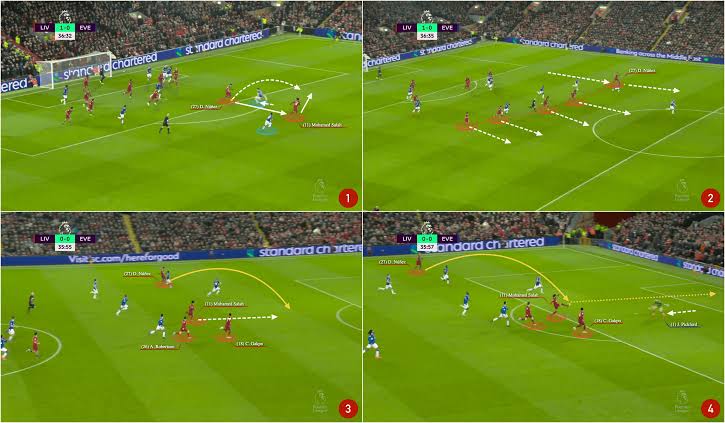
Proposition markets that isolate which club scores first or last in a match represent an under-utilized analytical avenue in football wagering, often escaping the heavy efficiency seen in primary 1X2 and Asian Handicap lines. The 2009/10 Premier League season highlighted a stark tactical divide between possession-dominant giants and direct, transition-focused sides designed specifically to absorb pressure and strike into vacated defensive space. Because bookmakers routinely derive first and last goal probabilities from generic full-match scoring expectancies, clubs with explosive transitional profiles systematically generate asymmetric value in opening and closing goal proposition markets.
The Mathematical Mechanism Behind Goal Sequence Proposition Pricing
Standard sportsbook pricing algorithms typically price the “First Team to Score” (FG) and “Last Team to Score” (LG) markets as direct proportional derivatives of a team’s implied win probability and match goal totals. If a heavy favorite possesses a seventy percent chance to win outright, oddsmakers automatically assign them a heavily compressed price to score both first and last. However, this mathematical assumption breaks down when applied to specialized counter-attacking teams whose tactical mechanisms are inherently front-loaded or back-loaded depending on game state and physical fatigue.
Evaluating empirical scoring sequences across the 2009/10 campaign confirms that a club’s tactical transition model exerts a much greater influence on goal sequence timing than overall table standing.
| Club & Primary Tactical Philosophy | Total League Goals Scored | Matches Scored First (% of Total) | Matches Scored Last (% of Total) | Primary Sequencing Edge |
| Aston Villa (Direct Vertical Transition) | 52 | 22 (57.9%) | 24 (63.2%) | First Team to Score as Away Underdog |
| Tottenham Hotspur (Pace-Heavy Wing Breaks) | 67 | 25 (65.8%) | 21 (55.3%) | First Goal against High-Line Defenses |
| Birmingham City (Deep Low-Block Containment) | 38 | 14 (36.8%) | 18 (47.4%) | Last Team to Score via Set-Piece Late Traps |
| Arsenal (Intricate High-Possession Dominance) | 83 | 24 (63.2%) | 27 (71.1%) | Last Team to Score vs Fatigued Low Blocks |
The data proves that transition-heavy clubs like Aston Villa punched far above their baseline win rate in goal-sequencing outcomes, opening scoring in nearly fifty-eight percent of their matches despite finishing sixth. Conversely, possession-heavy favorites yielded their highest sequencing reliability in late-game scenarios, where cumulative territorial pressure finally cracked retreating defensive units.
Aston Villa’s Vertical Blueprint: Exploiting Overextended Favorites for Early Openers
Martin O’Neill’s 2009/10 Aston Villa side provided the premier tactical blueprint for monetizing First Team to Score markets, particularly in away fixtures against top-four contenders. Operating with a compact back four and utilizing rapid vertical distributors in central midfield, Villa needed only a single turnover to spring Gabriel Agbonlahor and Ashley Young into expansive channels. Because elite home favorites commit full-backs high up the pitch within the opening fifteen minutes, Villa regularly capitalized on early structural overextensions before the opposition defense found its positional rhythm.
When evaluating historical proposition pricing across an established website, tracking the margin discrepancies between match moneylines and first-goal propositions reveals substantial pricing lag on transition underdogs, a dynamic observable on ufabet เข้าสู่ระบบ when reviewing historical odds for high-profile away upsets during the 2009/10 season. Taking plus-money odds on a transition underdog to strike first frequently offered higher expected value than holding full-match underdog spreads, capturing the exact tactical phase where the favorite was most vulnerable.
Late-Game Transition Physics: The Mechanics of the “Last Goal” Market
The tactical conditions governing the final fifteen minutes of a Premier League fixture are fundamentally different from opening exchanges, driven entirely by trailing teams abandoning defensive shape in search of equalizers. When an organized counter-attacking side holds a 1-0 or 2-1 lead late in the second half, the opponent pushes all ten outfield players past the midfield line. This total spatial abandonment creates massive breakaway opportunities against completely unprotected center-backs.
The Dynamics of Injury-Time Counter-Strikes
As defensive fatigue sets in during the final ten minutes, the transition speed differential between fresh substitute wingers and tired central defenders widens exponentially. The defending transition team absorbs high crosses, wins the initial defensive header, and launches an uncontested two-on-one breakaway from the halfway line. This specific mechanism produced an enormous volume of 85th-to-90th-minute sealing goals across the 2009/10 season, making the counter-attacking leader an exceptionally strong wager to score the last goal of the match.
Cross-Matching Tactical Profiles for Sequencing Predictions
Predicting first and last goal distributions requires matching specific transition mechanisms against the opposing side’s defensive rest structure. A counter-attacking team will struggle to score first if the opposing favorite employs a cautious mid-block with disciplined holding midfielders who refuse to vacate central areas.
Applying a systematic pre-match screening checklist ensures that sequencing wagers are grounded in verified tactical friction.
- High Defensive Line Vulnerability: Verify that the favored opponent deploys center-backs who lack recovery pace against vertical sprint threats.
- Turnover Generation Rate: Confirm the transition underdog ranks in the top tier for winning tackles in the middle third of the pitch.
- Counter-Attacking Finishing Efficiency: Check that the underdog converts high-quality transition chances at an above-average rate, preventing wasted opening breakaways.
Utilizing this targeted screening protocol allows sports bettors to filter out low-probability scenarios, ensuring that capital is directed toward fixtures where the spatial setup naturally produces early breakaway goals.
The Inversion Hazard: Early Set-Piece Concessions and Game State Collapse
The fundamental failure mode when backing a counter-attacking side in first-goal markets is the concession of an early set-piece goal. If a transition team falls behind inside the opening ten minutes due to a corner or penalty, their entire operational identity is instantly compromised. Forced to step out of their low block to dictate possession against an entrenched opponent, their transition advantage evaporates, leaving them vulnerable to counter-attacks themselves.
In statistical environments where unexpected game-state shifts reflect the dynamic probability adjustments found inside a casino online website, an early disruption to the planned match script demonstrates how quickly initial assumptions can dissolve. If a counter-attacking side is forced to chase a deficit without possessing the technical playmakers to unlock a low block, their probability of scoring the next goal drops dramatically.
Strategic Portfolio Construction: First versus Last Goal Allocation
Monetizing transition specialists requires splitting capital between First Team to Score and Last Team to Score based on the home-away dynamic and expected match posture. Away transition underdogs facing aggressive favorites provide optimal value in the First Goal market, where prices frequently exceed 2.50 to 3.00 decimal odds. Conversely, backing transition sides in the Last Goal market is best utilized when the counter-attacking side is a slight home favorite expected to protect a narrow second-half lead.
Summary
The 2009/10 Premier League season established that counter-attacking specialists offer distinct structural advantages in First and Last Team to Score proposition markets that standard full-match lines fail to capture. By exploiting the spatial voids left by aggressive, over-committed favorites early in matches, transition teams like Aston Villa consistently generated high-probability opening strikes at substantial plus-money odds. Furthermore, the chaotic spatial conditions of late-game scenarios allowed organized low-block teams to regularly secure the final goal via breakaway counters. Achieving long-term profitability in goal sequencing markets requires isolating tactical matchups where high defensive lines directly collide with elite vertical pace, bypassing blended full-match probabilities in favor of situational game-state analysis.
