

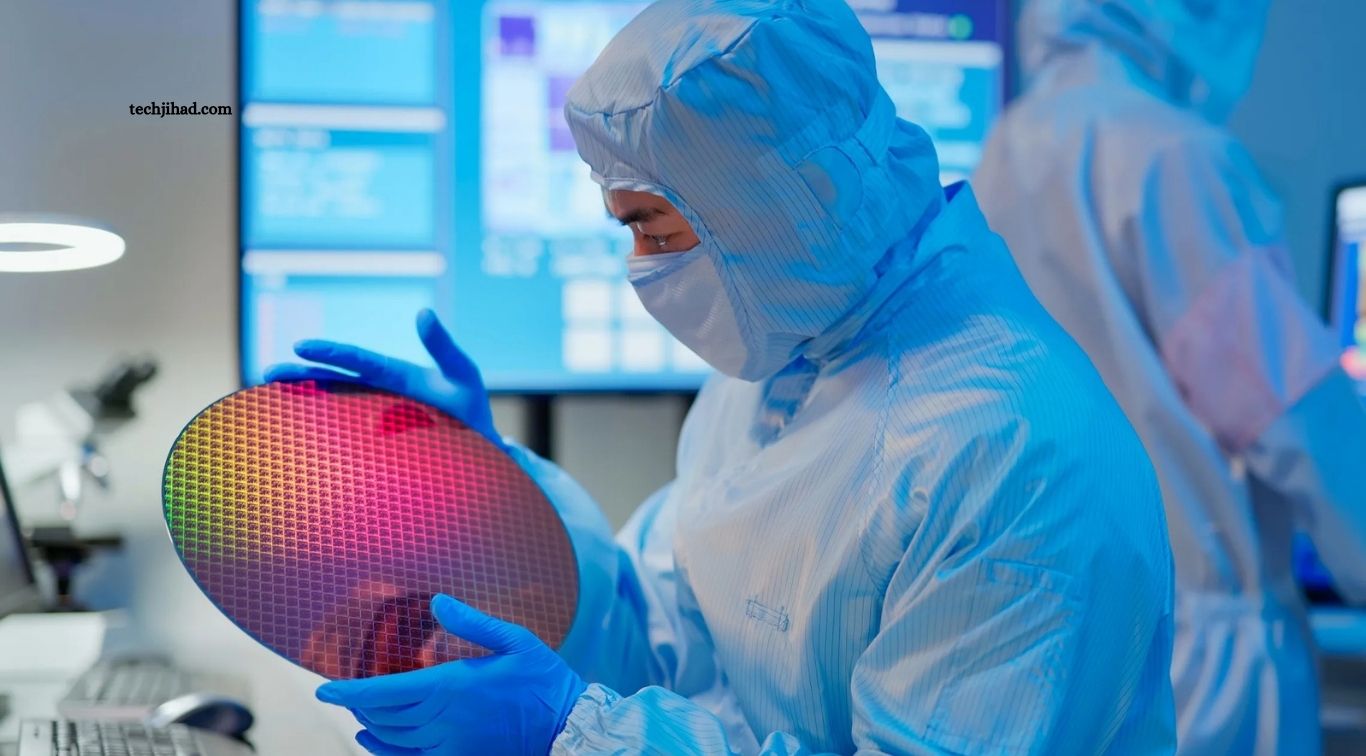
The semiconductor industry has reached an important milestone as 2nm chips move from research and development into high-volume production. What once seemed like future technology is now becoming a practical manufacturing platform for next-generation smartphones, artificial intelligence systems, high-performance computers, and advanced electronic devices.
The transition to 2nm manufacturing represents more than a smaller process number. It introduces advanced transistor designs, improved power efficiency, higher performance, and greater transistor density. As demand for artificial intelligence and high-performance computing continues to grow, 2nm technology could become a major foundation for future electronics.
Read More: IFA 2026 Reveals Lenovo’s New AI PC Push
What Are 2nm Chips?
A 2nm chip refers to a semiconductor manufacturing process generation. The term does not mean every component inside the processor measures exactly 2 nanometers.
Modern process-node names represent improvements in transistor technology, density, performance, and power efficiency. At the 2nm generation, chip manufacturers are introducing more advanced transistor structures that allow electricity to flow more efficiently.
These improvements help manufacturers create processors that can deliver greater computing power while managing energy consumption more effectively.
TSMC Takes 2nm Into High-Volume Production
TSMC is one of the leading companies driving the transition toward commercial 2nm manufacturing.
Its N2 process entered high-volume production in late 2025, marking a major step from technology development toward large-scale commercial manufacturing. Production is expected to expand significantly as customer demand increases.
TSMC’s 2nm technology targets several important markets, including:
- Artificial intelligence
- High-performance computing
- Smartphones
- Data centers
- Networking equipment
- Advanced consumer electronics
The company is using nanosheet transistor technology for its N2 process, representing a major architectural change from previous FinFET-based generations.
Samsung Expands Its 2nm Technology
Samsung is also competing aggressively in the 2nm semiconductor market. The company has moved its first-generation 2nm technology into mass production and is continuing to develop newer versions of the process. Samsung is targeting applications across smartphones, artificial intelligence, high-performance computing, automotive systems, and other advanced markets.
Competition between major chip manufacturers is important because it can accelerate semiconductor innovation while giving chip designers more manufacturing options.
Why 2nm Chips Matter
The move toward 2nm technology is important because modern computing demands increasingly powerful and efficient processors. Several major benefits make 2nm technology significant.
Higher Performance
Advanced transistor technology can help processors deliver higher performance without requiring a proportional increase in power consumption.
This can benefit smartphones, gaming systems, AI accelerators, graphics processors, and data-center hardware.
Better Power Efficiency
Power consumption has become one of the biggest challenges in modern computing. Smartphones require better battery life, while data centers need to control electricity and cooling costs. More efficient semiconductor processes can help manufacturers address both challenges.
Greater Transistor Density
Smaller and more advanced transistor structures allow manufacturers to place more computing capability into a similar physical area.
Higher transistor density can support larger caches, improved AI engines, more processing cores, and increasingly advanced system-on-chip designs.
2nm Chips and Artificial Intelligence
Artificial intelligence is one of the biggest reasons behind the industry’s investment in advanced semiconductor technology.
Modern AI workloads require enormous amounts of computing power. Training and running advanced AI models can involve thousands of processors operating continuously in large data centers.
This creates strong demand for processors that deliver maximum performance while consuming less energy. As AI technology expands into smartphones, PCs, vehicles, robotics, and edge devices, efficient high-performance processors will become increasingly important.
2nm Technology in Smartphones
Smartphones are expected to become an important market for 2nm processors.
A more advanced processor could provide several benefits, including:
- Faster application performance
- Better gaming capabilities
- Improved AI processing
- Longer battery life
- Enhanced photography features
- Faster image processing
- More capable on-device AI
The biggest advantage may not simply be faster performance. Manufacturers can use improved efficiency to deliver better battery life while maintaining strong processing capabilities.
2nm Chips for PCs and Data Centers
The impact of 2nm technology could be even more significant in computers and data centers. AI-powered PCs require powerful processors capable of handling increasingly complex workloads locally. Data centers face an even larger challenge because AI systems require huge amounts of computing power and electricity.
More efficient 2nm processors could help data centers increase computing performance while controlling energy consumption. This could become particularly important as demand for AI services, cloud computing, and large language models continues to expand.
Advanced Packaging Is Also Important
Smaller transistors are only one part of modern semiconductor development. Chip manufacturers are increasingly using advanced packaging technologies to combine multiple chiplets, processors, memory components, and other elements into a single system.
Advanced packaging can improve communication between components and allow manufacturers to build more powerful systems without relying entirely on smaller transistor sizes. For AI hardware, combining 2nm processors with advanced packaging and high-bandwidth memory could provide major performance improvements.
2nm Will Not Replace Older Chips Immediately
Despite the attention surrounding 2nm technology, older semiconductor processes will remain important. Not every electronic product requires the newest manufacturing technology. Automotive controllers, industrial equipment, sensors, power-management chips, and many everyday devices can continue using mature manufacturing processes.
Advanced 2nm production is expensive and technically complex. Manufacturers will therefore continue selecting different process generations based on performance, reliability, cost, and application requirements. The semiconductor industry will operate across multiple process generations rather than moving completely to 2nm.
Challenges of High-Volume 2nm Production
Moving from laboratory development to high-volume production is a major challenge. Manufacturers must maintain high production yields, consistent quality, reliable performance, and competitive costs while producing millions of chips.
Even small manufacturing problems can create significant financial losses when production volumes become extremely large. 2nm production also requires advanced manufacturing equipment, specialized materials, highly controlled fabrication facilities, sophisticated software, and extensive engineering expertise. Successfully reaching high-volume production therefore represents a major achievement for semiconductor manufacturers.
The Race Is Already Moving Beyond 2nm
The semiconductor industry is not stopping at 2nm. Major chip manufacturers are already developing technologies beyond the 2nm generation. Future process technologies are expected to deliver additional improvements in performance, energy efficiency, transistor density, and chip design flexibility.
This rapid development shows how competitive the semiconductor industry has become. A technology can move from research laboratories to commercial production while manufacturers are already preparing the next generation.
The Future of 2nm Chips
The arrival of high-volume 2nm manufacturing marks another important stage in semiconductor evolution. As production expands, 2nm technology is expected to appear across smartphones, AI processors, PCs, servers, networking equipment, and other advanced computing systems.
Consumers may not immediately notice the manufacturing technology inside their devices. However, its effects could become visible through faster performance, improved battery life, stronger AI capabilities, and more efficient computing.
Frequently Asked Questions
What are 2nm chips?
2nm chips use an advanced semiconductor process designed to deliver higher performance, better efficiency, and greater transistor density.
Why are 2nm chips important?
They can provide faster processing, lower power consumption, and improved efficiency for AI, smartphones, PCs, and data centers.
Who is producing 2nm chips?
Major manufacturers such as TSMC and Samsung are developing and producing advanced 2nm chips.
Will 2nm chips improve smartphone battery life?
Yes. Better power efficiency can help smartphones deliver stronger performance while potentially reducing energy consumption.
Are 2nm chips used for AI?
Yes. 2nm technology is particularly valuable for AI processors because AI workloads require high performance and energy efficiency.
Will 2nm replace older chips?
No. Older manufacturing processes will continue serving products that prioritize affordability, reliability, or specific technical requirements.
Conclusion
2nm chips moving from laboratories to high-volume production represent a major milestone for the semiconductor industry. The technology combines advanced transistor structures with improved performance, power efficiency, and transistor density. As manufacturers expand production and competition increases, 2nm technology is expected to become an important foundation for the next generation of smartphones, AI systems, computers, and data-center hardware.
