

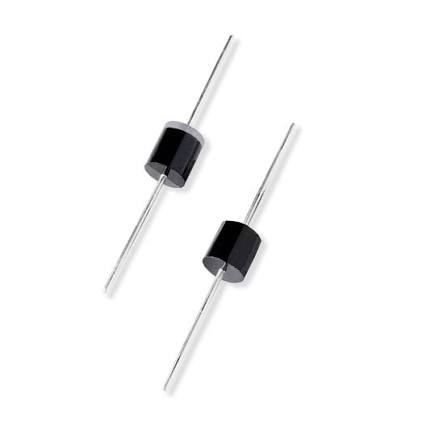
Introduction
Modern electronic devices depend on stable power and reliable signal connections to operate safely. However, sudden voltage spikes caused by lightning, switching operations, electrostatic discharge, or other electrical disturbances can damage sensitive components. Even a brief surge may affect circuit performance, shorten product life, or lead to unexpected equipment failure. This is why transient voltage suppressors (TVS) play an important role in electronic circuit protection.
These semiconductor devices help limit dangerous voltage spikes and protect valuable electronic systems from transient overvoltage events. Good-Ark offers a TVS product category that helps engineers compare protection devices based on important electrical ratings and package options. By understanding how transient voltage suppressors work and how to evaluate their specifications, designers can make informed choices for power supplies, communication equipment, industrial controls, and consumer electronics. Selecting the right TVS device is an important step toward building safer, more reliable electronic products.
Understanding Transient Voltage Suppressors and Their Role
Transient voltage suppressors are semiconductor protection components designed to respond quickly when a circuit experiences a sudden increase in voltage. Under normal operating conditions, a TVS device allows the circuit to function within its intended voltage range. When a voltage transient rises above a certain level, the device conducts more current and helps limit the voltage reaching sensitive components. This action reduces the risk of damage to integrated circuits, microcontrollers, sensors, and other electronic parts.
TVS diodes are widely used because they provide fast response times and can handle short bursts of surge energy within their specified limits. They are available in different configurations, including unidirectional and bidirectional devices, to support various circuit designs. Unidirectional TVS diodes are commonly used in DC power lines, while bidirectional options are often suitable for AC signals and communication lines. Good-Ark’s TVS product category gives engineers a starting point for comparing available devices and understanding which electrical characteristics matter for their applications.
Common Causes of Voltage Transients in Electronic Systems
Voltage transients can occur in many environments, from household electronics to demanding industrial installations. Lightning-related surges can introduce high-energy disturbances into power and communication lines, while switching inductive loads such as motors, relays, and solenoids can generate sudden voltage changes. Electrostatic discharge, often caused by contact between people and electronic equipment, is another common threat to sensitive circuits. In automotive systems, electrical disturbances may occur during load switching, ignition activity, and changes in the vehicle’s power network.
These events can create brief but potentially harmful voltage peaks. Without suitable protection, repeated exposure may cause immediate component failure or gradual degradation. Transient voltage suppressors help reduce these risks by providing a controlled path for surge current and limiting excessive voltage. However, no single TVS component protects every circuit under all conditions. Engineers must consider the expected surge waveform, source impedance, operating voltage, and energy level before selecting a device. A well-planned protection strategy may also include fuses, filtering components, grounding, and other surge protection methods.
Key Specifications for Comparing TVS Protection Devices
Choosing the right transient voltage suppressor requires more than checking its product name or package size. Engineers should review several electrical parameters to determine whether a device matches the circuit’s needs. Peak pulse power describes the surge power a TVS device can handle under specified test conditions, while working standoff voltage identifies the maximum continuous voltage the device is designed to tolerate without significant conduction. Breakdown voltage indicates the voltage range where the device begins its specified avalanche conduction, and clamping voltage describes the voltage across the device at a stated surge current.
These values work together to show how a TVS diode behaves during normal operation and transient events. Peak pulse current is another important rating because it indicates the current the device can handle for a defined pulse and waveform. Good-Ark’s TVS category provides a component comparison table with parameters such as peak pulse power, working voltage, clamping voltage, current, and package options. Reviewing these specifications side by side helps engineers narrow their choices before checking detailed datasheets, test conditions, and application requirements.
Package Options and Practical Device Selection
The physical package of a transient voltage suppressor affects how easily it fits into a circuit and how the final product can be manufactured. Surface-mount devices are often preferred for compact electronics and automated assembly, while through-hole packages may suit certain power applications or designs that require different mechanical characteristics. Package selection should also account for thermal behavior, available board space, assembly methods, and expected surge conditions. Still, the smallest device is not always the best option. Engineers must confirm that the selected component offers sufficient electrical protection and operates within its specified limits.
When evaluating Good-Ark transient voltage suppressors, designers should compare package dimensions alongside peak pulse power, working voltage, clamping voltage, and peak pulse current. They should also check capacitance when protecting high-speed data interfaces, since excessive capacitance can affect signal quality and communication performance. For power circuits, the normal supply voltage and possible operating variations must remain compatible with the TVS device. Careful selection helps balance circuit protection, board layout, cost, and long-term reliability.
Best Practices for Reliable Surge Protection Design
Effective surge protection starts with understanding the circuit’s operating environment and identifying the components most vulnerable to overvoltage. Engineers should select a TVS device with a working voltage appropriate for the normal supply or signal range while ensuring that its clamping voltage is low enough to protect the downstream components. The surge current and pulse power ratings must match the expected transient conditions, with suitable design margins where needed. Board layout is equally important. Placing the TVS device close to the connector or circuit entry point can help reduce unwanted voltage caused by trace inductance during fast transients.
Short, direct connections to the intended return path also support better protection performance. In high-speed signal applications, engineers should evaluate capacitance and signal integrity alongside surge ratings. Testing the complete circuit under relevant conditions can reveal problems that component specifications alone may not show. Good-Ark’s comparison information can help simplify the initial selection process, but engineers should always consult the individual datasheet for tolerances, test waveforms, temperature limits, and recommended operating conditions. Combining appropriate components with careful layout and testing creates a more dependable protection design.
Conclusion
Transient voltage suppressors are essential components for reducing the effects of sudden voltage spikes and improving the reliability of modern electronic systems. By limiting transient overvoltage, TVS diodes help protect sensitive semiconductor devices in power supplies, communication interfaces, automotive electronics, industrial equipment, and consumer products. However, effective protection depends on choosing a device that matches the circuit’s working voltage, clamping voltage, peak pulse power, current requirements, and physical design.
Good-Ark provides a useful starting point for comparing transient voltage suppressors through its TVS category and component comparison table. Engineers can use these specifications to identify suitable candidates before reviewing detailed datasheets and validating their designs. With careful component selection, thoughtful PCB layout, and proper testing, designers can reduce the risk of surge-related failures and build more robust electronic products. As electronic systems continue to become smaller and more connected, reliable overvoltage protection remains an important part of quality engineering and long-term product performance.
