

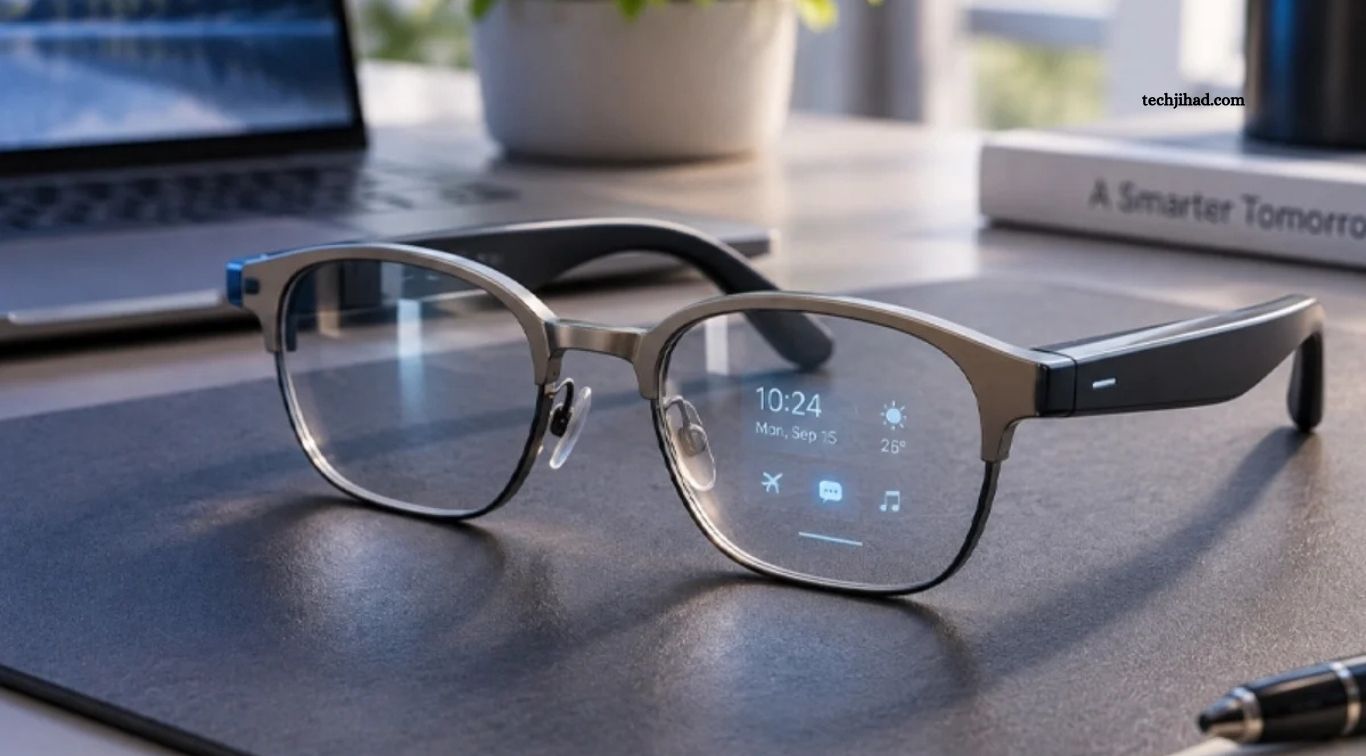
Smart glasses are evolving beyond cameras and audio controls, with manufacturers exploring ways to bring artificial intelligence directly into everyday eyewear. The RayNeo iO Smart Glasses take a distinctive approach by combining a lightweight frame, a transparent display, and AI-powered features without including a camera. The goal is to help users access information, translate conversations, and manage everyday tasks while keeping their attention on the world around them.
Announced in August 2026 and released in September, RayNeo iO targets people who want convenient, hands-free assistance without the privacy concerns that can accompany camera-equipped glasses. Its features include an unobtrusive heads-up display, voice interaction, live translation, meeting notes, and reminders. However, the product also raises practical questions about comfort, battery performance, connectivity, and how useful a small display can be throughout the day.
Read More: Vivo Buds Target 50-Hour Battery Life With New Audio Features
What Are RayNeo iO Smart Glasses?
RayNeo iO is a pair of AI-powered smart glasses designed to make digital information accessible without requiring users to constantly check their phones. Instead of focusing on photography or immersive entertainment, the glasses emphasize everyday productivity and quick access to useful information. Their built-in display can present notifications, AI responses, schedules, weather information, and other supported content directly within the wearer’s field of view.
The glasses weigh approximately 33 grams and use a transparent monochrome MicroLED display system. RayNeo says the optical design provides 97% light transmittance, helping the lenses remain relatively clear while displaying information. The frame combines magnesium-aluminum alloy and titanium components, balancing lightweight construction with durability. These specifications make iO an interesting option for people who want smart features in eyewear that resembles ordinary glasses rather than a bulky augmented reality headset.
Why the Camera-Free Design Matters
One of RayNeo iO’s defining features is the absence of a camera. Many smart glasses use cameras to capture photographs, record videos, or provide visual context to an AI assistant. Although these capabilities can be useful, they may also make people nearby uncomfortable because it can be difficult to know when recording is taking place. A camera-free design removes the glasses’ ability to capture photos and videos directly, creating a clearer distinction between information-focused eyewear and wearable recording devices.
This approach may be particularly appealing in workplaces, classrooms, public transport, and social settings where recording is restricted or unwelcome. It also means users cannot point the glasses at an object and expect the AI assistant to analyze it through a built-in camera. The design therefore involves a trade-off: it reduces one category of privacy concern but limits visual AI capabilities. Users should still review how voice recordings, notes, connected services, and other data are processed rather than assuming that the absence of a camera guarantees complete privacy.
A Transparent Display That Keeps Information in View
RayNeo iO features a transparent, monochrome display that presents information in the wearer’s line of sight. The company describes it as a 33-inch-equivalent display, although this refers to the perceived virtual image rather than a physical screen mounted in the glasses. The display is designed for brief information and heads-up assistance instead of watching movies or viewing large, detailed images. Its purpose is to let users glance at relevant information while continuing with their activities.
The glasses can display items such as AI responses, notifications, schedules, weather details, captions, translations, and teleprompter text. This could be useful when checking an upcoming appointment, reading a short prompt during a presentation, or following translated speech. The display uses green monochrome text and has a listed field of view of 23.5 degrees. Whether this experience feels natural will depend on individual eyesight, lighting conditions, display positioning, and personal comfort. Users should also understand that a heads-up display can still distract them if they attempt to read too much while walking or performing tasks that require full attention.
AI Assistance Without Constantly Checking Your Phone
RayNeo iO is designed to provide access to AI assistance through voice interaction and its built-in display. Users can ask supported questions, retrieve information, and view responses without taking their phone out of a pocket or bag. The glasses support RayNeo AI and selected Gemini services, while access to additional AI models may require a subscription. This approach gives the product a different purpose from smart glasses that primarily focus on capturing content or playing audio.
Everyday assistance could include checking information, organizing plans, viewing reminders, or asking questions while working or travelling. However, the usefulness of these features depends on connectivity, compatible services, speech recognition, and the quality of AI responses. Since the glasses do not have a camera, the assistant cannot directly interpret the user’s surroundings through a built-in camera feed. Users should also check which AI models are available in their country, whether particular features require payment, and what happens when the glasses lose their connection to a phone or online service.
Live Translation and Meeting Notes
Live translation is one of the more practical applications for RayNeo iO. The glasses can display translated text and live captions, with RayNeo advertising support for 55 languages. This could help travellers follow conversations, assist people navigating multilingual environments, or make certain spoken interactions easier to understand. Showing text directly in the wearer’s field of view may also reduce the need to alternate between a conversation and a phone screen.
The glasses also support meeting-note features and voice-based information capture, making them potentially useful for professionals and students. For example, a user might want help keeping track of a discussion or remembering important points from a conversation. These capabilities should not be treated as a guarantee of perfect transcription or translation, however. Background noise, accents, overlapping speakers, network conditions, and language support can affect the results. Before using the glasses for important meetings, users should test their accuracy and obtain consent where recording or transcription rules require it.
Battery Life, Connectivity, and Everyday Comfort
RayNeo lists a 240mAh battery and advertises up to two days of everyday use. Actual battery life will depend on how often users activate AI features, use the display, translate conversations, or record audio. The company’s published specifications also distinguish between typical everyday use and more demanding activities, so continuous translation or recording should not be expected to last as long as occasional notifications and short interactions.
The glasses use Bluetooth 5.4 and support phone connectivity, with an MFi certification listed in the specifications. Their lightweight construction is intended to make extended wear more comfortable, while an IP54 rating provides resistance to dust and water splashes under specified test conditions. That rating does not mean the glasses are waterproof or suitable for swimming or showering. Buyers should also consider prescription-lens options, frame fit, charging arrangements, and compatibility with their phone. As with other connected wearables, comfort and practical battery performance matter just as much as advertised features.
How RayNeo iO Differs From Camera-Based Smart Glasses
Camera-based smart glasses are often designed around photography, video recording, and AI features that can interpret visual information. RayNeo iO takes a different route by emphasizing information displayed in the lens, voice interaction, and productivity features. That distinction matters for buyers because the two categories solve different problems. Someone who wants to capture hands-free videos may prefer a camera-equipped model, while someone who wants notifications and translation without a camera may find iO more appealing.
The camera-free approach also changes how people interact with AI. Without a built-in camera, iO cannot directly identify a landmark, read a physical sign through its own camera, or analyze an object in front of the wearer using captured images. Its strongest use cases are therefore tasks that rely on speech, connected information, and concise text rather than visual recognition. This more focused design may be an advantage for some users, but anyone expecting a fully context-aware visual assistant should compare its capabilities carefully with those of camera-equipped alternatives.
Price, Availability, and Who Should Consider Buying
RayNeo iO went on sale in September 2026 through RayNeo’s official store and other announced retail channels. At the time of launch, the company and retail announcements listed a starting price of approximately US$449, although the final cost can vary by configuration, promotion, prescription lenses, and included accessories. Buyers should confirm the current price and availability on the official product page before placing an order. Regional shipping, taxes, warranties, and access to particular AI features may also affect the overall value.
The glasses may suit frequent travellers, professionals who attend meetings, people who use teleprompters, and users who want quick access to notifications without repeatedly looking down at a phone. They may be less suitable for people who prioritize photography, immersive media, or advanced visual recognition. Before purchasing, consider whether the display is useful for your routine, whether the supported languages match your needs, and whether subscription costs apply to the AI features you want. The best reason to buy iO is a clear everyday use case, not simply the novelty of wearing AI-enabled eyewear.
Frequently Asked Questions
Do RayNeo iO smart glasses have a camera?
No. RayNeo iO is designed without a camera, so it cannot directly capture photos or videos. Its main features focus on AI assistance, a transparent display, translation, and productivity.
What can the RayNeo iO display show?
The display can show supported AI responses, notifications, schedules, weather information, live captions, translations, and teleprompter content. It is designed for quick information rather than full-screen entertainment.
Do RayNeo iO glasses support live translation?
Yes. RayNeo advertises live captions and translation support for 55 languages. Actual performance and language availability may vary, so users should check current specifications and test the feature before relying on it.
How long does the RayNeo iO battery last?
RayNeo advertises up to two days of everyday use. Battery life varies depending on display activity, AI usage, translation, audio functions, and other operating conditions.
Can I use RayNeo iO with prescription lenses?
RayNeo offers prescription-lens options for iO. Buyers should confirm the available lens configurations, fitting process, and additional costs before ordering.
Who should buy RayNeo iO smart glasses?
They may suit users who want hands-free AI assistance, translation, notifications, or meeting support without a camera. People who prioritize photo and video capture should consider other smart glasses instead.
Conclusion
RayNeo iO smart glasses represent a different direction for wearable AI. Instead of putting a camera at the center of the experience, they combine a lightweight frame, a transparent heads-up display, voice assistance, translation, and productivity features. The camera-free design may make them more comfortable to use in privacy-sensitive environments, while the display offers a way to access brief information without constantly reaching for a phone. However, the glasses are not a replacement for every smart wearable.
