

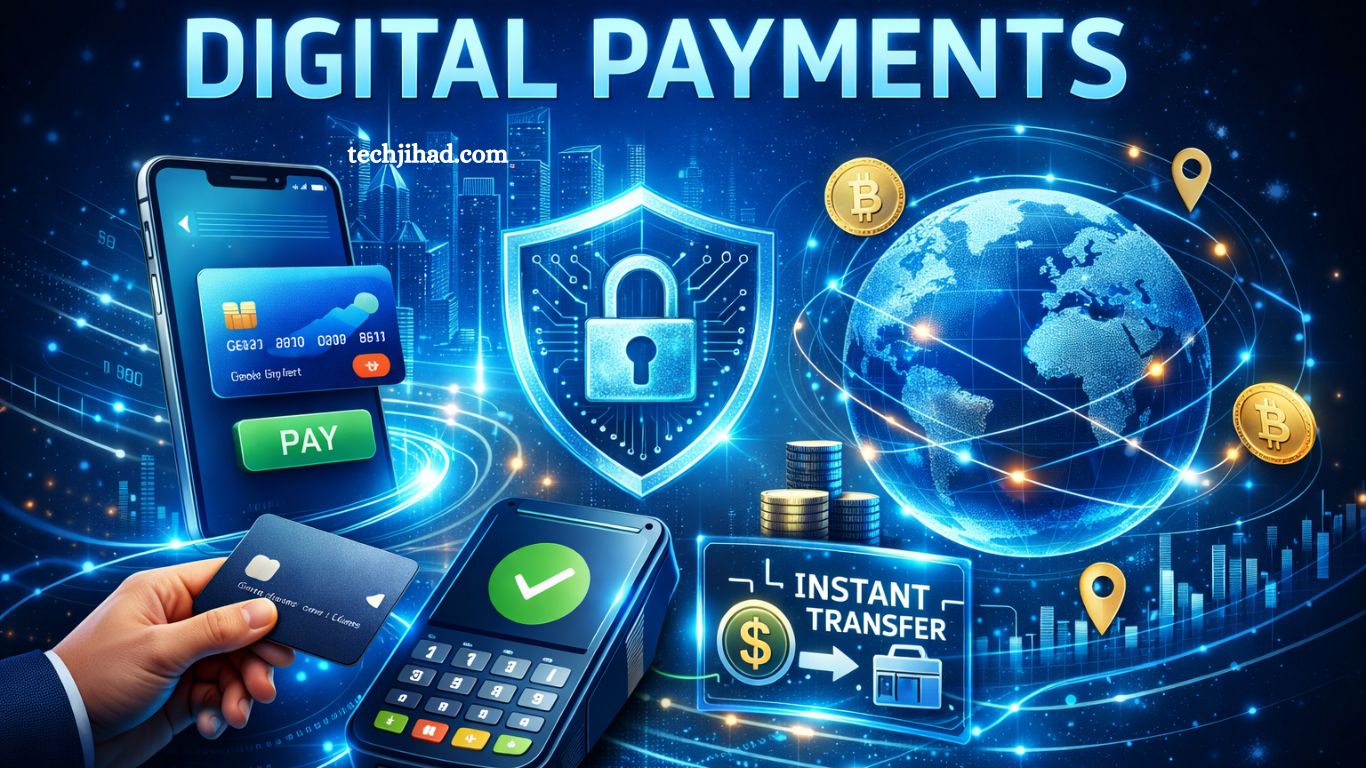
Powering the Future of Digital Payments means creating faster, safer, and more seamless ways for people and businesses to pay anytime, anywhere. As digital commerce grows, customers expect instant transactions, secure authentication, and frictionless checkout experiences across every channel. Modern payment solutions combine smart technology, real-time processing, and advanced fraud prevention to deliver reliable performance at scale.
From mobile wallets and contactless payments to embedded finance and cross-border transfers, innovation is transforming how money moves worldwide. Businesses that adopt next-generation payment systems can reduce costs, improve customer satisfaction, and unlock new revenue opportunities. By prioritizing security, speed, and convenience, digital payments are shaping a connected financial future built for today’s evolving market demands.
The Rise of Digital Payments: Why the Future Is Already Here
Digital payments have grown rapidly due to changes in consumer behavior, the rise of mobile-first lifestyles, and the growth of online shopping. The shift accelerated further as businesses embraced contactless and remote payment solutions to meet customer expectations.
Today’s customers want:
- Fast checkout experiences
- Multiple payment options
- Secure transactions
- Smooth mobile payments
- Reliable cross-border payments
Businesses that deliver these experiences gain a competitive advantage. Those that don’t risk losing customers to competitors offering smoother and more modern payment journeys.
Read more: How to Protect Data from Hackers
Key Drivers Shaping the Future of Digital Payments
Several major forces power the next generation of digital payments. These drivers are pushing the industry toward faster, safer, and more intelligent transaction systems.
Consumer Demand for Convenience
Customers want payments that fit naturally into their lives. They don’t want to enter card details repeatedly, wait for bank approvals, or struggle with complex checkout flows. The future belongs to payment systems that feel invisible and effortless.
Growth of Digital Commerce
Ecommerce continues to expand, including mobile commerce, social commerce, and subscription-based services. Every digital purchase requires a secure, optimized payment experience.
The Need for Stronger Security
Fraud is becoming more advanced. Cybercriminals target payment systems, customer accounts, and online transactions. Businesses must adopt advanced fraud detection and authentication systems to stay ahead.
Globalization and Cross-Border Trade
Companies now sell internationally more than ever. Customers want to pay in their preferred currency using local methods. Cross-border payments must become faster, cheaper, and more transparent.
Innovation in Financial Technology
Fintech solutions are introducing smarter ways to process payments, manage risk, and improve customer experiences. This includes AI-driven fraud tools, digital wallets, and embedded finance.
Digital Wallets and Contactless Payments: The New Normal
Digital wallets are now central to modern payments. They allow users to securely store cards, pay with a tap, and complete online purchases without entering payment details.
Popular wallet-driven payment behaviors include:
- Tap-to-pay in stores
- One-click online checkout
- In-app payments
Peer-to-peer transfers
Contactless payments also reduce friction at checkout and improve transaction speed, especially in high-volume environments like retail, transit, and events.
For businesses, supporting digital wallets can:
- Improve conversion rates
- Reduce checkout abandonment
- Enhance security through tokenization
- Strengthen customer loyalty
Digital wallets are no longer optional—they’re a key part of a future-ready payment strategy.
Real-Time Payments: Speed Becomes the Standard
Traditional payment methods can take hours or even days to settle. The future is shifting toward real-time payments, where money moves instantly between accounts.
Real-time payment systems offer major benefits:
- Instant fund availability
- Improved cash flow for businesses
- Faster payouts for gig workers and marketplaces
- Better customer satisfaction
As real-time payment networks expand, businesses can improve operational efficiency and reduce dependency on slow settlement cycles.
Embedded Finance: Payments Integrated Into Everyday Experiences
Embedded finance is transforming how people interact with money. Instead of visiting a bank or using separate financial apps, users access financial services directly within platforms they already use.
Examples of embedded payment experiences include:
- Ride-sharing apps offering in-app payments
- Ecommerce platforms providing installment plans
- Marketplaces enabling instant seller payouts
- SaaS tools integrating invoicing and payment collection
This shift benefits businesses by keeping users engaged and simplifying payment processes. It also opens new revenue opportunities through value-added financial services.
Embedded payments will continue to grow because they make transactions smoother, faster, and more personalized.
Buy Now, Pay Later (BNPL) and Flexible Payment Options
Consumers increasingly want flexibility in how they pay. Buy Now, Pay Later solutions allow customers to split purchases into installments, often with low or no interest.
BNPL works well because it:
- Makes high-ticket purchases more affordable
- Reduces friction at checkout
- Boosts average order value
- Improves conversion rates
However, businesses must carefully select BNPL partners and ensure responsible lending practices. When implemented strategically, flexible payments can drive growth while supporting customer needs.
AI and Machine Learning: Smarter Fraud Prevention and Risk Management
Fraud prevention is a top priority in digital payments. As transaction volumes grow, manual fraud detection becomes ineffective. AI and machine learning now play a major role in identifying suspicious activity in real time.
AI-powered fraud prevention can:
- Detect unusual spending behavior
- Identify account takeovers
- Block fraudulent transactions instantly
- Reduce false declines for legitimate customers
- Adapt to new fraud patterns quickly
Machine learning models continuously improve based on transaction data, making them more accurate over time.
For businesses, smarter fraud tools mean fewer chargebacks, reduced losses, and stronger customer trust.
Tokenization and Encryption: Strengthening Payment Security
Security is a foundation of the future payment ecosystem. Tokenization and encryption help protect customer data and reduce risk.
Tokenization
Tokenization replaces sensitive card information with a secure “token” that cannot be used outside a specific payment environment. Even if stolen, tokens are useless to attackers.
Encryption
Encryption protects data while it moves through networks and payment systems. It ensures customer information remains unreadable if intercepted.
Together, tokenization and encryption:
- Reduce data breach impact
- Improve compliance with security standards
- Strengthen customer confidence
- Enable safer digital wallet payments
As cyber threats grow, these technologies will become even more critical.
Biometric Authentication: Safer Payments Without Passwords
Passwords are inconvenient and vulnerable. The future is shifting toward biometric authentication, which verifies identity using unique physical traits.
Common biometric methods include:
- Fingerprint scanning
- Facial recognition
- Voice recognition
Biometric security improves payment experiences by reducing friction while enhancing protection. Users can approve transactions quickly without having to remember passwords or PINs.
Biometrics also help reduce fraud, especially for mobile payments and digital banking apps.
Cross-Border Payments: Faster, Cheaper, More Transparent
International payments often involve multiple banks, currency conversions, and high fees. These barriers create delays and reduce trust.
The future of cross-border payments focuses on:
- Lower transaction fees
- Faster settlement
- Improved transparency
- Better exchange rates
- Local payment method support
Businesses that expand globally need payment providers that support multi-currency processing and local preferences. A customer in one country may prefer bank transfers, while another may rely on mobile wallets or regional payment systems.
Cross-border optimization helps businesses increase international sales and improve customer satisfaction worldwide.
The Role of Blockchain in Digital Payments
Blockchain technology continues to influence digital payments, particularly in terms of settlement speed and transparency. While blockchain-based payments are still evolving, they offer potential advantages such as:
- Reduced intermediaries
- Faster cross-border transactions
- Improved transaction tracking
- Lower processing costs in some cases
However, businesses must consider regulatory requirements, volatility risks (in certain crypto-based systems), and customer adoption levels.
Blockchain may not replace traditional payments entirely, but it will likely play an increasingly important role in specific use cases, such as remittances, supply chain payments, and digital asset transfers.
The Importance of Payment Orchestration
Modern businesses often operate across multiple regions, channels, and customer segments. A single payment provider may not offer the best performance everywhere. Payment orchestration helps businesses manage multiple payment gateways and methods through one unified layer.
Payment orchestration improves:
- Transaction success rates
- Payment routing efficiency
- Cost optimization
- Redundancy and uptime
- Reporting and analytics
It also supports rapid scaling by allowing businesses to add new payment methods and providers without rebuilding their entire infrastructure.
For enterprises and fast-growing brands, payment orchestration is becoming a key strategy for powering the future of digital payments.
Customer Experience: The Most Underrated Payment Advantage
Technology matters, but customer experience drives results. Even a secure payment system can fail if checkout feels slow or confusing. Businesses must optimize payment experiences across devices and channels.
A future-ready payment experience should include:
- Fast page load times
- Mobile-first checkout design
- Multiple payment options
- Minimal form fields
- Transparent pricing and fees
- Easy refunds and dispute handling
When payments are smooth, customers buy more and return more often.
Compliance and Regulation: Building Trust at Scale
As digital payments expand, governments and regulators enforce stricter rules to protect consumers and prevent financial crime.
Key compliance areas include:
- Payment security standards (like PCI requirements)
- Anti-money laundering (AML) policies
- Know Your Customer (KYC) verification
- Data privacy regulations
Compliance is not just a legal requirement—it’s a trust-building advantage. Businesses that invest in secure, compliant payment systems reduce risk and improve customer confidence.
How Businesses Can Prepare for the Future of Digital Payments
To stay competitive, businesses must treat payments as a strategic growth function—not just a backend process. Here are key steps to prepare:
Offer Multiple Payment Methods
Support cards, digital wallets, bank transfers, and local payment options to meet customer expectations.
Prioritize Security and Fraud Prevention
Invest in AI-driven fraud detection, tokenization, and strong authentication.
Optimize Checkout for Mobile
A mobile-first payment experience is essential for conversions and customer retention.
Improve Payment Performance
Use smart routing, multiple gateways, and analytics to reduce failed transactions.
Enable Real-Time Payouts
Fast payouts improve seller satisfaction, gig worker retention, and marketplace trust.
Build for Global Growth
Support multi-currency payments, local methods, and transparent cross-border pricing.
Use Data to Improve Decisions
Track payment analytics, including authorization rates, chargebacks, and customer drop-off points.
Frequently Asked Questions
What are digital payments?
Digital payments are electronic transactions made with cards, mobile wallets, bank transfers, or online payment platforms rather than cash.
Why are digital payments growing so fast?
Digital payments are expanding due to mobile usage, ecommerce growth, faster checkout expectations, and improved security technologies.
What is the safest digital payment method?
Digital wallets with tokenization, biometric authentication, and strong encryption are among the safest payment methods available today.
How do real-time payments work?
Real-time payments transfer money instantly between bank accounts, allowing immediate settlement and faster access to funds.
What is embedded finance in digital payments?
Embedded finance integrates payment and financial services directly into apps and platforms, enabling faster, more convenient transactions.
How can businesses reduce online payment fraud?
Businesses can reduce fraud using AI-driven monitoring, multi-factor authentication, tokenization, and secure payment gateways.
What trends will shape the future of digital payments?
Key trends include digital wallets, contactless payments, real-time processing, AI fraud prevention, cross-border innovation, and payment orchestration.
Conclusion
The future of digital payments is fast, secure, and seamless, transforming how businesses and consumers exchange money worldwide. Innovations like digital wallets, real-time payments, AI-driven fraud prevention, and embedded finance are redefining the payment experience, making transactions simpler and more reliable. Businesses that prioritize speed, security, and convenience gain a competitive edge, enhance customer trust, and unlock new growth opportunities.
